Assistance
This can refer to help with a tyre, battery, lockout or fuel issue. The specific options depend on the provider, the vehicle and the problem. A familiar service name does not establish what is included.
TUNCELI / ROADSIDE READING
Understand the difference between assistance and towing, then use 8 practical questions to make service discussions clearer. A field guide for reading, comparing and confirming.
Open the field guideInformation first. Confirm arrangements with a provider.
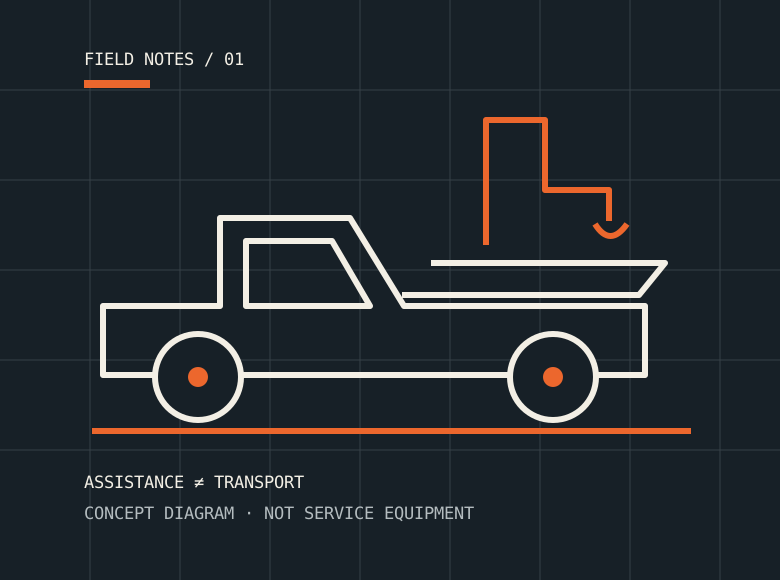
01 / THE DISTINCTION
Start with the service being discussed. The original Tunceli page introduces roadside assistance and towing together, but the two terms describe different kinds of support.
This can refer to help with a tyre, battery, lockout or fuel issue. The specific options depend on the provider, the vehicle and the problem. A familiar service name does not establish what is included.
This means arranging vehicle transport to an agreed destination. Suitable equipment, loading arrangements and the journey itself affect the discussion. Confirm the destination and the terms before accepting a quotation.
02 / BEFORE A BOOKING
Three conversations can make a service description easier to evaluate. Use the answers to compare the actual arrangement, not just the headline price.
Ask which task is covered and whether the provider can accommodate your vehicle. A quotation for transport is different from a quotation for assistance at the vehicle. Describe the issue without assuming its cause.
Ask how the charge is calculated, what it includes and which extra charges could apply. Distance, waiting and storage are useful subjects to clarify. Request the agreed terms in writing where possible.
If you have an assistance policy or membership, check its terms with the organisation responsible for it. Eligibility and approval requirements can matter. Do not assume an independently arranged service will be covered.
03 / A USEFUL DESCRIPTION
Prepare the vehicle make and model, the problem you have observed and the location relevant to the request. Ask the provider what else it needs to assess access and equipment. You do not need to diagnose a mechanical fault to describe what you noticed.
01 What service is being proposed?
02 Is the vehicle eligible?
03 What does the quotation include?
04 What destination has been agreed?
READ WITH CONTEXT
This site also contains community and education material. Its About page introduces Acil Yardım through philanthropy and community themes. That broader context is useful when reading a page that discusses commercial services.
Browse Academic Information for the established category, or explore the Other archive. A general description is a starting point for questions; it does not verify a provider’s present coverage, credentials or availability.
For site information, review the privacy policy and terms of service. Keep service decisions grounded in current, direct information from the organisation you intend to use.
THE QUESTION FILE / 08 ENTRIES
Plain-language answers for understanding terms and setting expectations.
Roadside assistance is a broad term for help with vehicle problems during a journey. The original page discusses tyres, batteries, lockouts, fuel and towing. Those are topics to ask a provider about, rather than a confirmed package: availability, vehicle eligibility and charges need to be checked directly.
Towing concerns transporting a vehicle, while roadside assistance can describe help intended to resolve a problem at its location. A provider may offer both, but the arrangements can differ. Ask which service is being quoted, where the vehicle would be taken and whether loading or distance adds a charge.
The make, model and a clear description of the problem give a provider a useful starting point. Mention any known access constraints or vehicle modifications when discussing the booking. Let the provider explain what further information is needed to assess suitable equipment and the scope of the service.
A useful quotation identifies the service, intended destination and how the price is calculated. Ask about any loading, distance, waiting or storage charges that could apply. Confirm what is included before accepting an arrangement, and request a written record so the terms remain clear to both parties.
Yes. Your policy or membership documents can show whether assistance is included and how a request must be made. Check vehicle eligibility, geographical limits, exclusions and any authorisation requirements with the organisation providing the cover. A general article cannot confirm the benefits or conditions of an individual policy.
This page provides reading and questions for comparing arrangements; it does not offer a booking form or a verified dispatch number. References to services should not be treated as a confirmed offer. Establish the identity and current contact details of the provider you choose before making a booking.
No. This page does not verify operating hours, local coverage or arrival times for a service provider. Those details depend on the organisation and the circumstances of a request. Ask your chosen provider for its current availability and how it communicates changes to an agreed arrangement.
Use the Academic Information, Blog and Other links to explore the site’s existing sections, or open About for its community focus. The archive covers a broader range of subjects than this roadside guide. Read each page in its own context and check the source of any service claim.
CONTINUE READING
Follow the site’s existing reading routes for more articles and community topics.